

Developing the Skills to Lead Through Uncertainty
How a cross-industry Showing Up LLC Leadership Intensive helped leaders move from recognizing struggle to responding with skill.
The Participants:
Leaders Across Industries
A Showing Up LLC Leadership Intensive brought together leaders from healthcare, education, nonprofits, government, and community organizations. Across sectors, they shared a common need for practical skills to navigate difficult conversations and support their people, especially while managing demanding responsibilities of their own.
The Problem:
Leaders Needed Skills- and Support
Pre-session Discovery data demonstrated that most leaders could see when someone was struggling, but they were much less certain about how to respond.
Nearly everyone—96%—at least sometimes avoided or delayed uncomfortable in-person conversations.
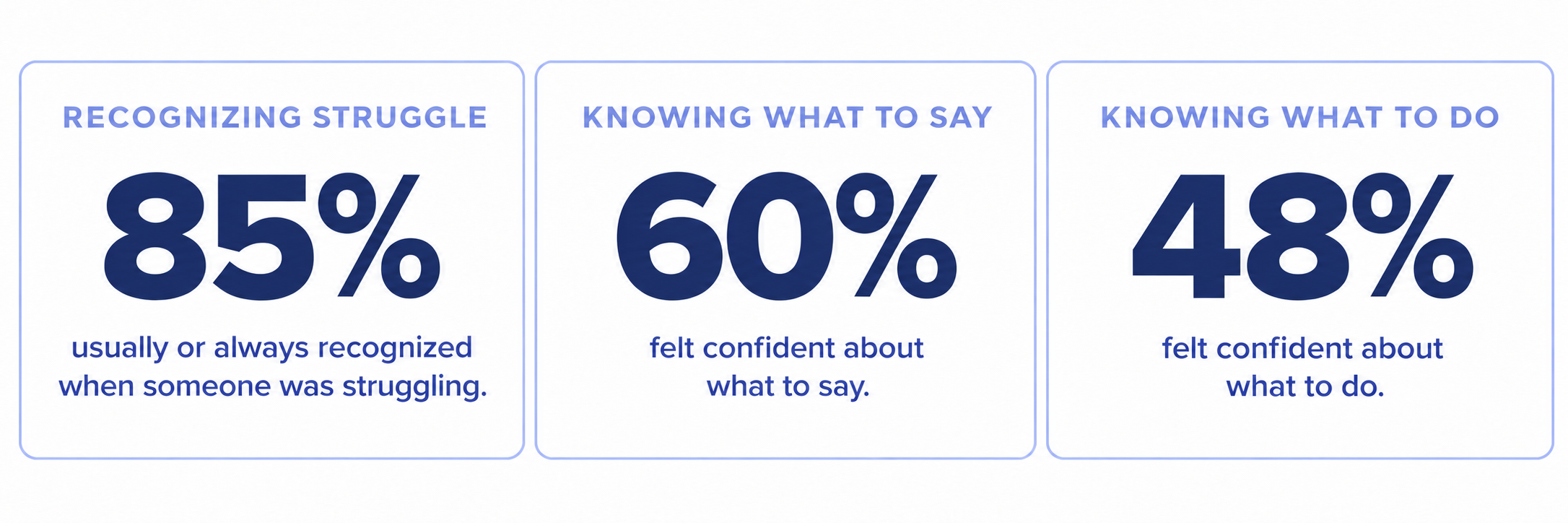
The people responsible for supporting others were also carrying significant strain themselves.
90% had experienced stress, anxiety, or low mood in the past year, and 54% reported burnout or persistent exhaustion.
Yet their own struggles often went unseen:
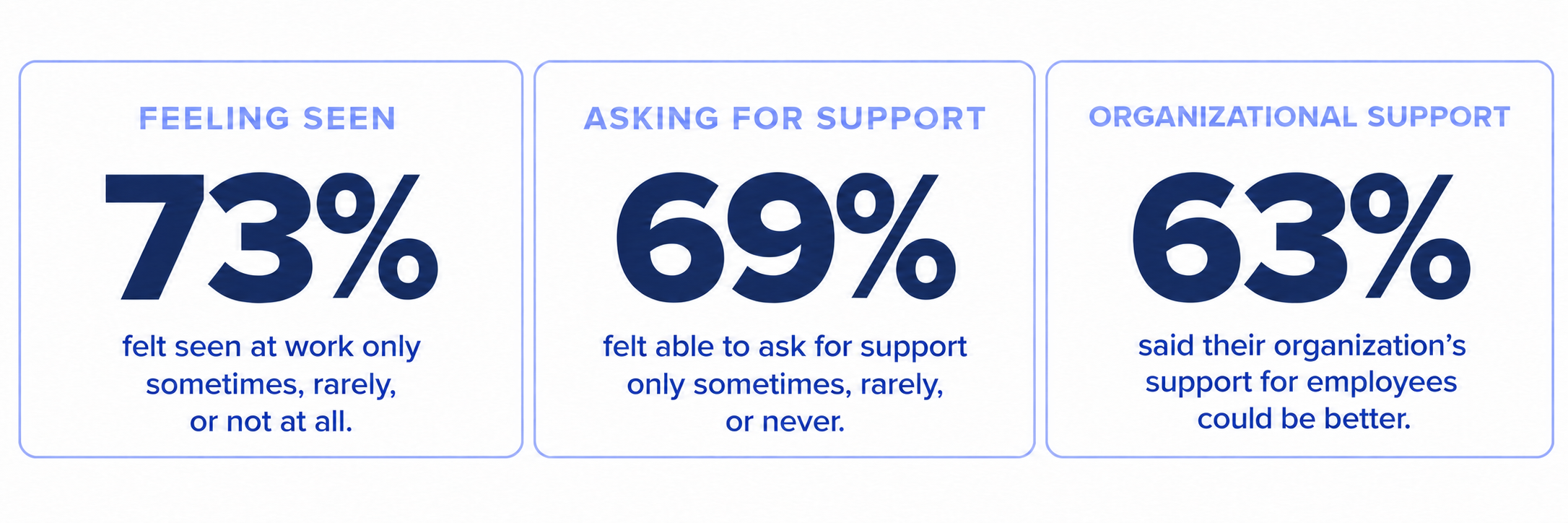
These experiences also pointed to broader organizational needs. 63% of participants said their organization’s support and care for employees could be better or was not being handled well at all.
Leaders needed both practical skills to support their people and stronger support around them. These findings reflected the Preparedness Gap™: as investment in technology and technical capabilities has grown, human skill development has not kept pace, leaving leaders underprepared for the complex human challenges their roles demand.
The Insight:
Different Industries, Shared Human Needs
Written responses and leadership roundtable discussions revealed common challenges across very different workplaces: shifting expectations, heavy workloads, communication gaps, and decisions made without participants’ input.
They wanted their own leaders to recognize their contributions, understand the demands of their roles, and notice when those demands exceeded their capacity. Across sectors, the needs were consistent: be heard, be included, and receive support before strain becomes overwhelming.
These insights shaped the intensive around two connected needs: building the relational skills to support others and learning to seek support themselves.
"Quote"
-Author
The Approach:
Develop Practical Skills for Shared Challenges
The intensive connected participants’ everyday leadership challenges with practical, repeatable relational skills. Through discussion, reflection, and practice, leaders learned to:
Connect organizational challenges to leadership needs.
Leaders identified organizational pain points and the leadership qualities needed to address them. They also explored how generational differences shaped expectations, communication, and experiences of support.
Recognize barriers in The Awkward Zone™.
Leaders examined how uncertainty about what to say, what to do, and whether to get involved can lead them to delay conversations, hesitate to offer support, or hold back their own needs.
Build skills for giving and seeking support.
Using the Supportive Conversation Method™, leaders practiced listening and understanding before offering advice or solutions. They learned effective phrases for supporting others, examined responses that can leave people feeling unheard, and practiced responding to unexpected disclosures and connecting people with available resources. They also learned a structured method for seeking support themselves: identifying their needs, preparing for a conversation, and asking for specific help.
Make support part of everyday leadership.
Participants reflected on the Lifting Up Five—Available, Attentive, Attuned, Affirming, and Invested—to identify strengths and areas for growth. They explored how thoughtful questions, focused attention, and consistent check-ins could strengthen everyday connection.
The Impact
Leaders gained hands-on experience navigating conversations they might previously have delayed or felt unsure how to approach. Role-play gave them opportunities to put the methods into practice, both as someone offering support and as someone asking for it. Participants:
Practiced listening before fixing.
Participants paused, asked questions, and gave others space to explain their needs before offering solutions. They identified distractions, unsolicited advice, and vague offers of help as habits to change.
Used a clear method to navigate difficult conversations.
Leaders used specific language and a structured process to understand concerns, identify support, and respond to uncertain moments. They also practiced expressing their own needs and asking for specific help.
Identified concrete ways to strengthen everyday connection.
Participants examined their current leadership habits and identified opportunities for brief, frequent check-ins, more thoughtful questions, and focused listening in daily interactions.
Training evaluations showed strong enthusiasm for the program:
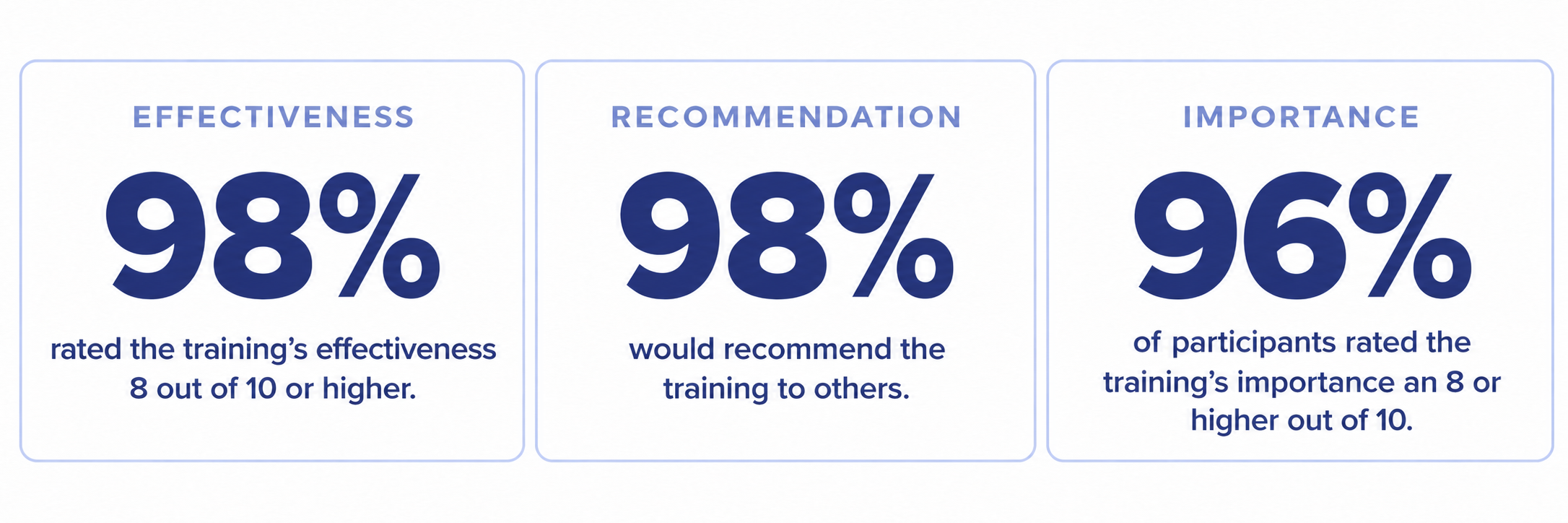
Participants highlighted practical tools and meaningful connections with fellow leaders. Several requested a longer session or additional time to practice tools and scenarios, reflecting interest in continuing to develop these skills.
From Recognition to Response
The Leadership Intensive gave leaders across industries a shared language, a repeatable conversation method, and hands-on practice navigating difficult human moments. Participants learned to recognize their barriers, listen before fixing, and respond with greater intention.
Across sectors, the intensive addressed a shared leadership need: turning the ability to notice struggle into the skills to respond.