Healthcare Case Study

The Client:
The Woman’s Hospital of Texas
The Woman’s Hospital of Texas (TWHT), part of HCA Healthcare’s Gulf Coast Division, wanted to build a workplace where employees felt seen, valued, and supported in the demanding work of healthcare.
The partnership began after Jen Marr delivered a well-received keynote at HCA’s Gulf Coast Leadership Development Institute in November 2022. Every leader in the division received a copy of Showing Up, and the positive response led divisional leadership to select TWHT for a pilot program.
What began as an effort to strengthen connection across the hospital became a focused investment in the people whose everyday interactions shape that culture: its leaders.
The Problem:
Care providers needed care too.
In July 2023, TWHT began with Showing Up LLC’s Discovery program: listening to employees and leaders before recommending a training plan.
Anonymous surveys, facilitated discussions, and individual leadership conversations explored where people felt supported, where connection was breaking down, and what would help.
The process grew well beyond its original scope. Four planned workshops became 27 Discovery Workshops, and six planned leadership conversations expanded to 16 individual engagements.
This deeper listening brought the hospital’s human challenges into focus.
The findings were striking:
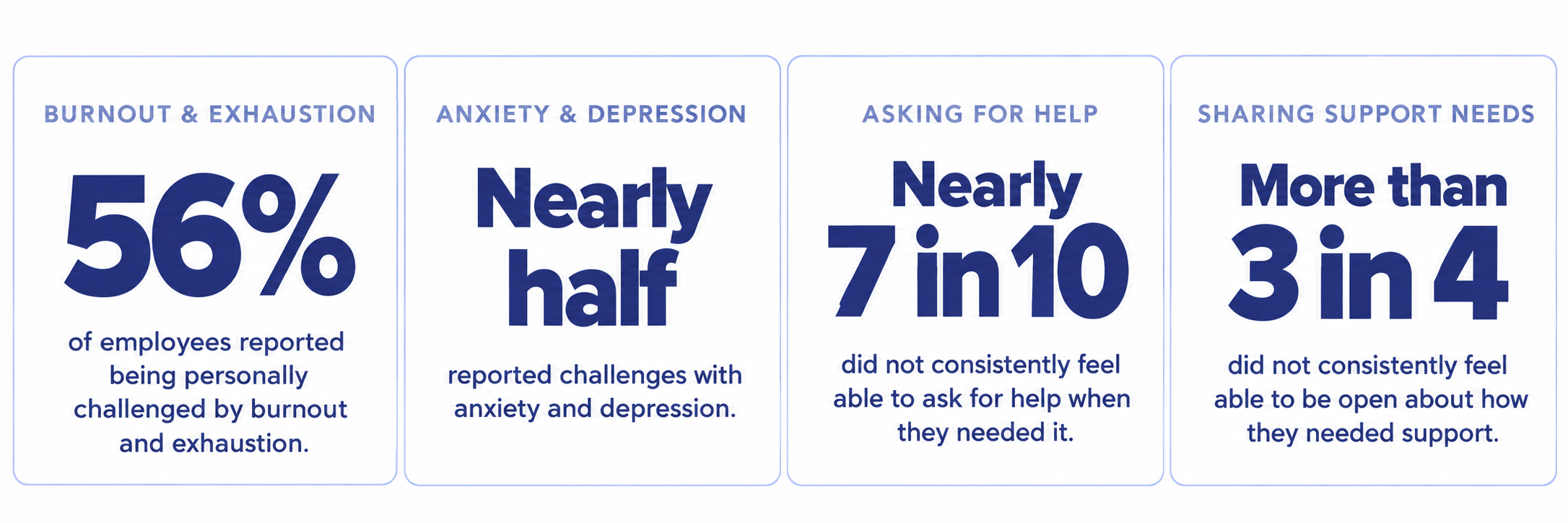
When asked what would help them feel more valued and cared for at work, employees ranked one answer above all others: leaders who care and are easy to engage with when needed.
That response ranked ahead of activities, wellness events, and even a benefits package that included mental health care.
Employees were pointing to the importance of the relationships they experienced every day.
Their comments gave the numbers context:
Some described leaders who were difficult to reach, especially on night shifts.
Others wanted more meaningful one-on-one conversations, acknowledgment of their contributions, and follow-through when they raised concerns
Some hesitated to speak openly because they feared judgment or negative consequences.
Managers and directors described competing priorities, difficulty accessing senior leaders, and a need for more care and support.
The people responsible for supporting others needed support themselves.
The Turning Point:
Start with Leadership
Discovery changed the direction of the pilot.
Before moving into a broader culture rollout, TWHT and Showing Up LLC agreed to focus first on the leadership practices that would make that work possible.
Four priorities emerged: approachability and availability; trust and consistency; psychological safety; and helping people feel seen, heard, and valued.
These priorities gave the training a clear purpose. Leaders needed practical ways to listen, build trust, respond to strain, and make it easier for employees to speak up. They also needed ways to navigate these conversations within the time pressures of hospital work.
The goal was to make supportive leadership a skill leaders could practice in everyday interactions- from a brief check-in to a difficult conversation.

Making Support Personal
The pilot also gave leaders a way to understand how individual team members preferred to receive support.
157 participants completed a Personal Care Profile, answering optional questions about their preferences and needs.
These responses were compiled into 43 consolidated reports prepared for leaders and managers, with guidance for using them in future conversations.
The profiles made an important distinction visible: people need different kinds of support. Some welcome a conversation about what they are facing; others prefer more privacy. Leaders received a practical starting point for understanding those preferences rather than relying on assumptions.
The Impact:
Practical Tools & Clear Goals
Training evaluations showed strong enthusiasm for the program:
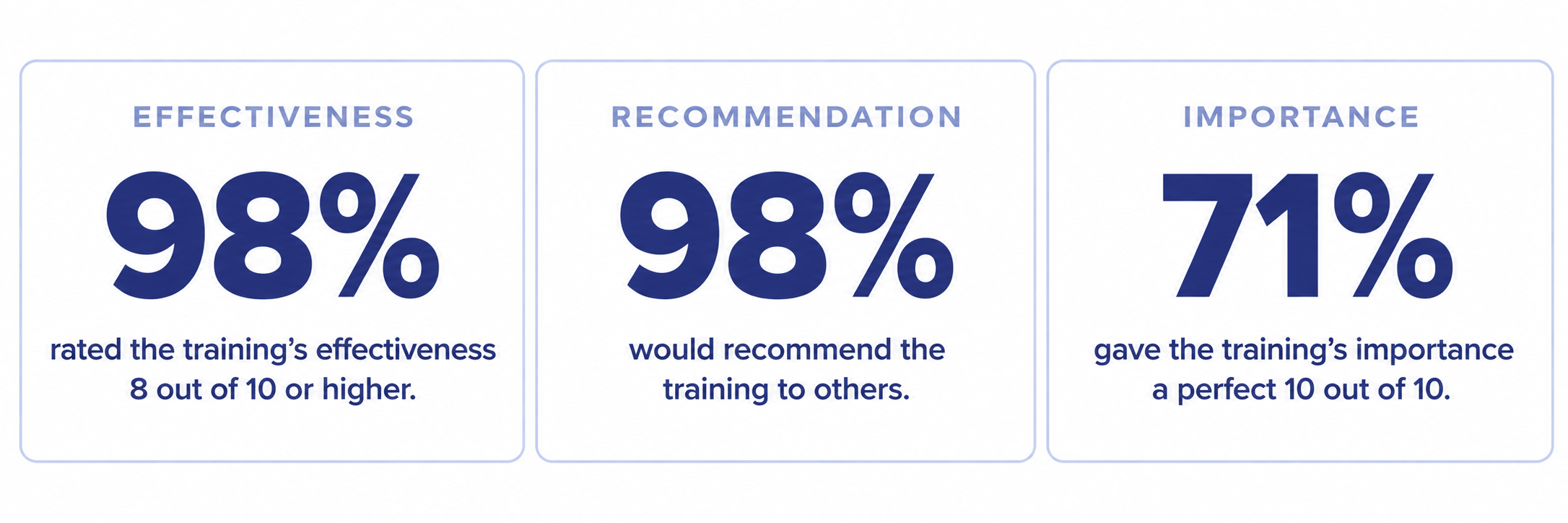
Participants highlighted the interactive activities, opportunities to connect with colleagues, and tools they could use after the sessions.
The closing Stop, Start, Continue exercise showed how participants intended to apply the learning.
Leaders wanted to stop automatically fixing problems, avoiding difficult topics, and using phrases that could minimize someone’s experience.
They planned to start allowing silence, using the PAUSE filter (what to consider when listening to someone who is struggling), listening more closely, and approaching difficult conversations with greater intention.
They also wanted to continue reaching out, being available, and building personal connections beyond the tasks of the workday.
A Foundation for Continued Change
The TWHT pilot demonstrated the value of listening before designing a solution.
Discovery revealed that employees wanted more accessible, consistent, and supportive relationships with their leaders and that leaders needed preparation and support to provide them.
By responding to those findings, the hospital moved from a broad culture initiative to targeted skill development grounded in its employees’ experiences.
Leaders gained a shared language, practical conversation tools, and personalized information to guide future support.