
Higher Education Case Study
The Client:
Concordia University Wisconsin
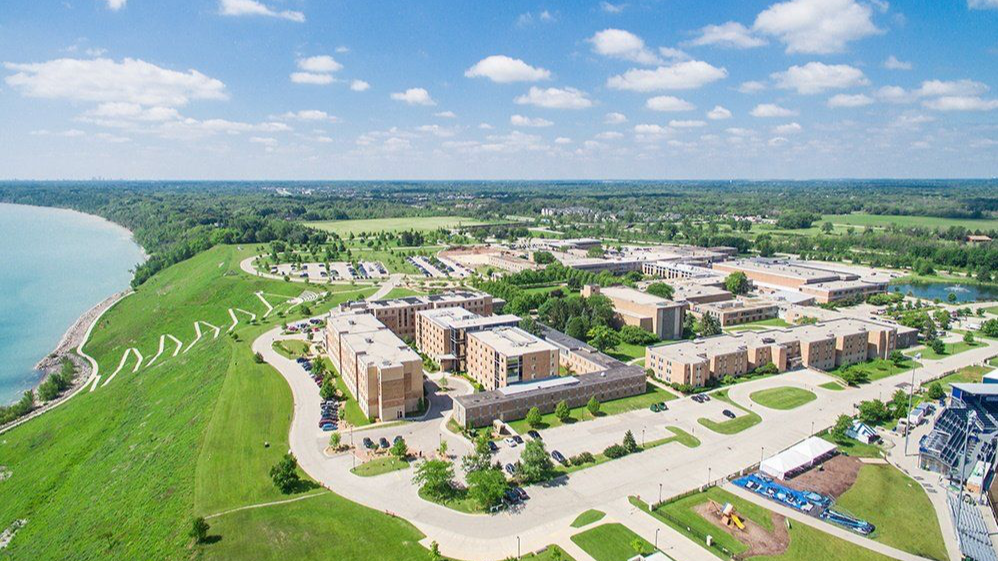
Concordia University Wisconsin is a 4-year private Lutheran university located in Mequon, Wisconsin, with an undergraduate enrollment of 2347 and graduate enrollment of 2538. The university prides itself on being a community that develops their students holistically in “mind, body, & spirit”.
The Problem:
XXXX
Like many college campuses across the country, Concordia University Wisconsin (CUW) was seeing a steady rise in mental health concerns among its student body. While traditional services—such as the campus counseling center—remained essential, a group of dedicated faculty and staff recognized that these reactive measures alone were no longer sufficient. They saw the need for a proactive, campus-wide approach—one that could equip the entire community to recognize signs of struggle earlier and foster a culture of connection, care, and support.
They recognized that one of the most critical groups in this effort were peer leaders, especially resident assistants (RAs). Peer leaders are often the first to notice when a student is withdrawing, isolating, or exhibiting subtle signs of struggle. However, while peer leaders were trained in how to respond to crisis situations, they lacked formal training in how to support students through the everyday struggles that precede a crisis.
Olivia Hartwig, a CUW resident assistant for 3 years, noted how many of her residents were struggling with mental health issues and “more bouts of isolation and loneliness”.
Recognizing this gap, Holly Reisman, Assistant Professor of Psychology, reached out to the Showing Up team on behalf of CUW’s Mental Health Committee to explore new ways of empowering peer leaders and the broader campus community.
The goal: shift from reactive crisis management to everyday relational care—where support starts long before someone walks through the doors of a counseling center or finds themselves in a crisis situation.
The Mental Health Committee developed a plan to begin building a culture of support by first training student peer leaders in Showing Up, followed by training social science students—recognizing that these relational skills would benefit them not only in everyday life, but also in their future professional careers.

Year 1: 2022-2023
Introducing Showing Up to Student Leaders
On August 15, 2022, Concordia University Wisconsin took a bold step toward addressing the growing mental health needs of its student body. That day, 82 peer leaders and their faculty/staff supervisors participated in a full day Showing Up training, learning practical, research-based skills in long-term supportive care and relational connection.
TMJ4 News captured the significance of this initiative, airing a feature at the top of the hour during Milwaukee’s 6 o’clock news. For many on campus, this was more than just a training—it was the start of a cultural shift.
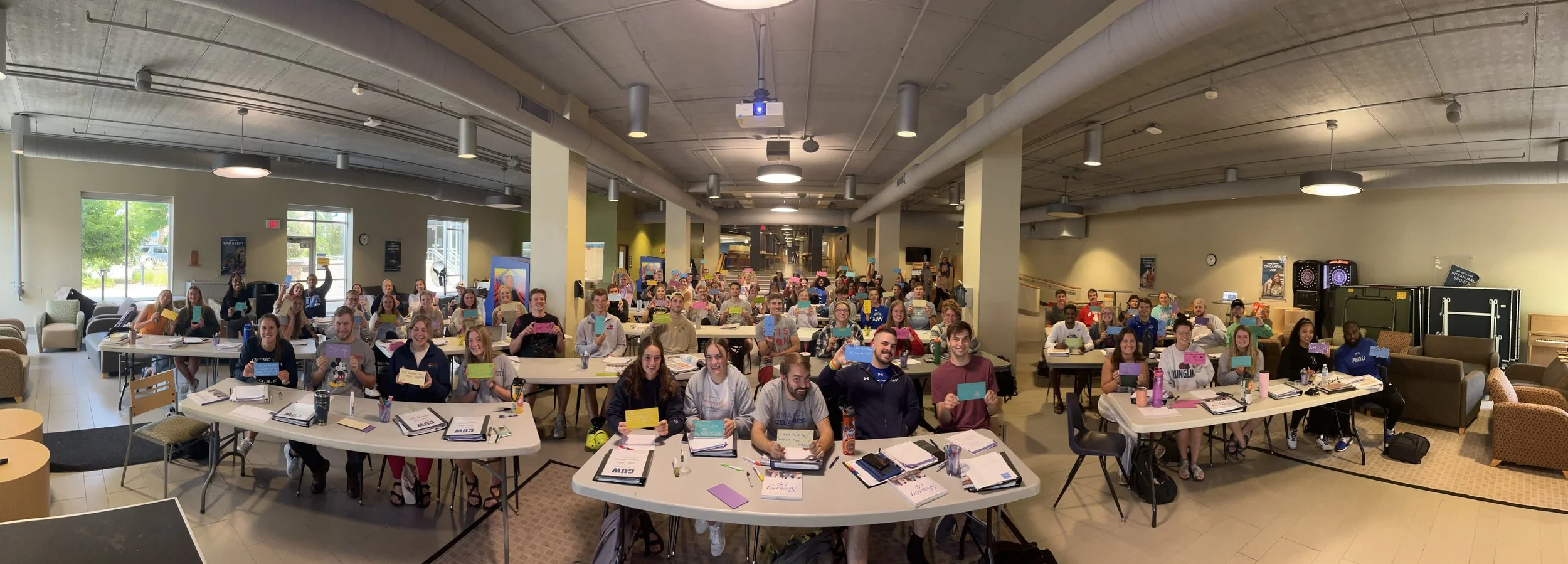
Director of Residence Life, Beckie Kruse, played a key role in integrating Showing Up into Residence Life programming. She shared:
“In Residence Life, one of our greatest responsibilities is to help students feel a sense of belonging. The specific, practical action steps from Showing Up are designed to help someone feel like they are not alone.”
Kruse emphasized how vital these skills are for today's students:
“Our Gen Z students have not had the same exposure to in-person experiences as generations before. They have not had the practice reading body language when their primary form of communication developed through messaging applications. They are hungry to learn the skill of listening with their eyes. And this compassionate generation needs a place to focus their energy; Showing Up gives them that.”
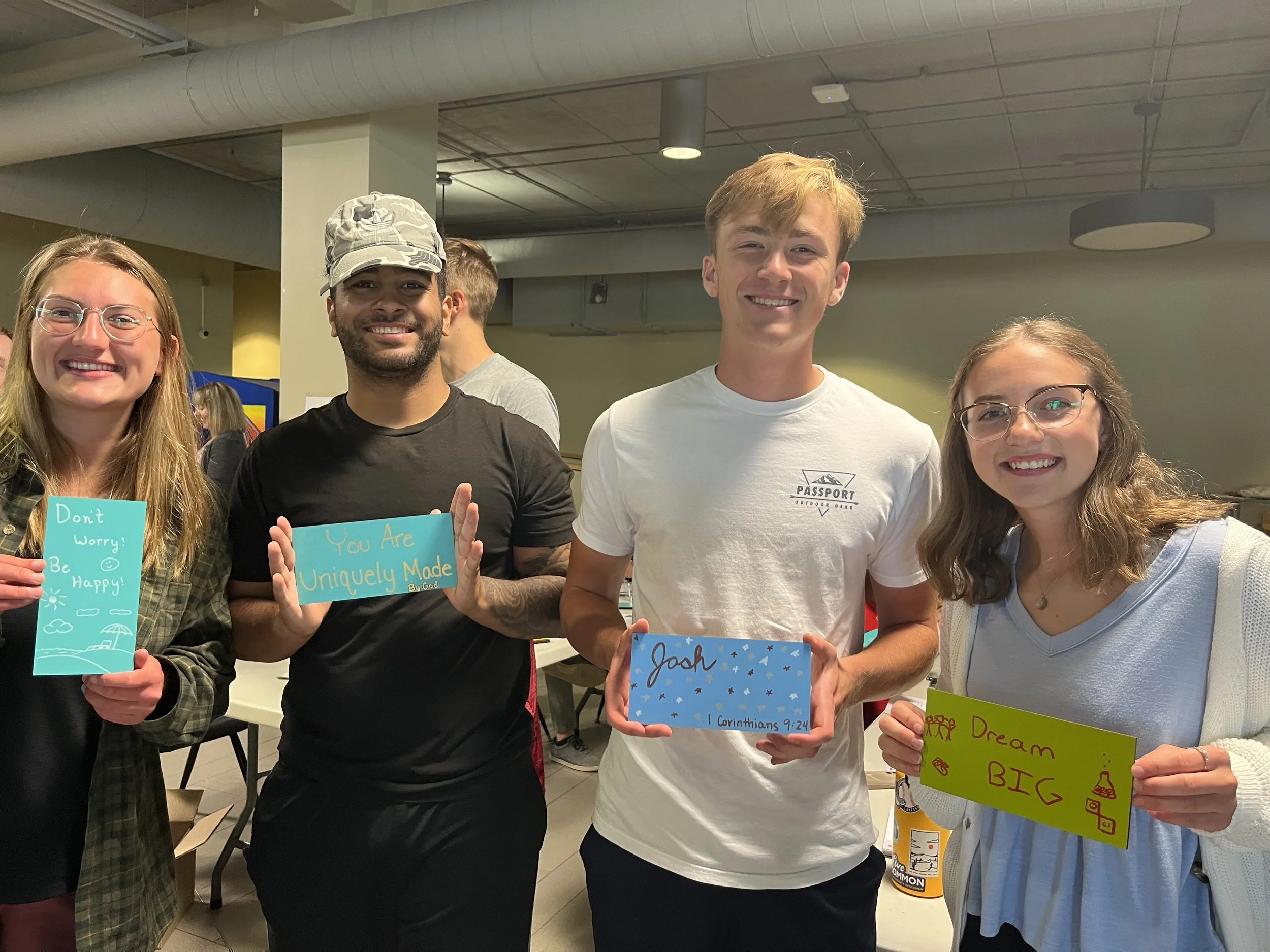
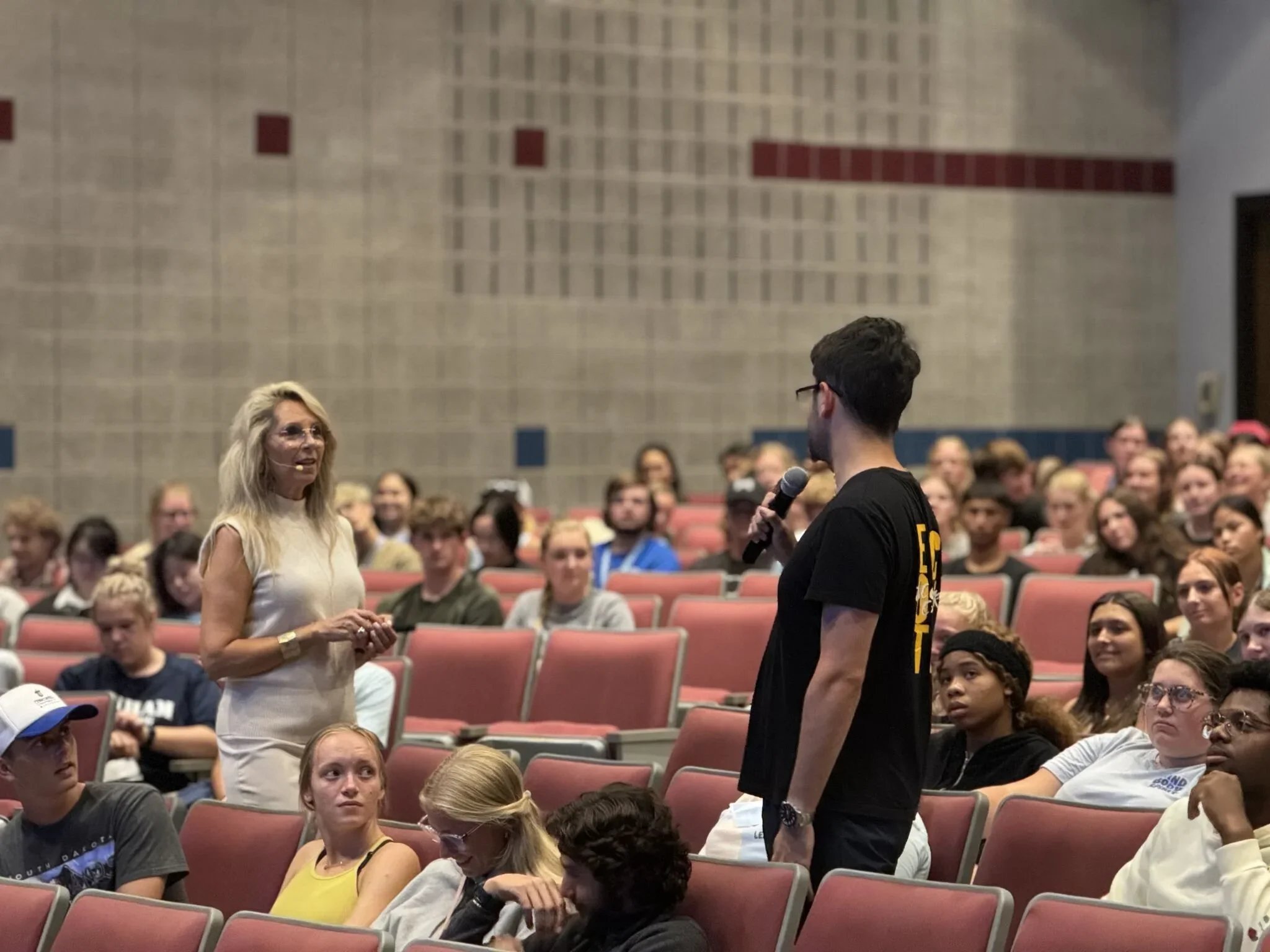
Just a few weeks later, on October 5, 2022, Jen Marr returned to CUW to train 300 social science students in human connection skills.
The results of the students’ anonymous pre-survey were striking, but told a similar story to that of nearly every other college campus across the country:
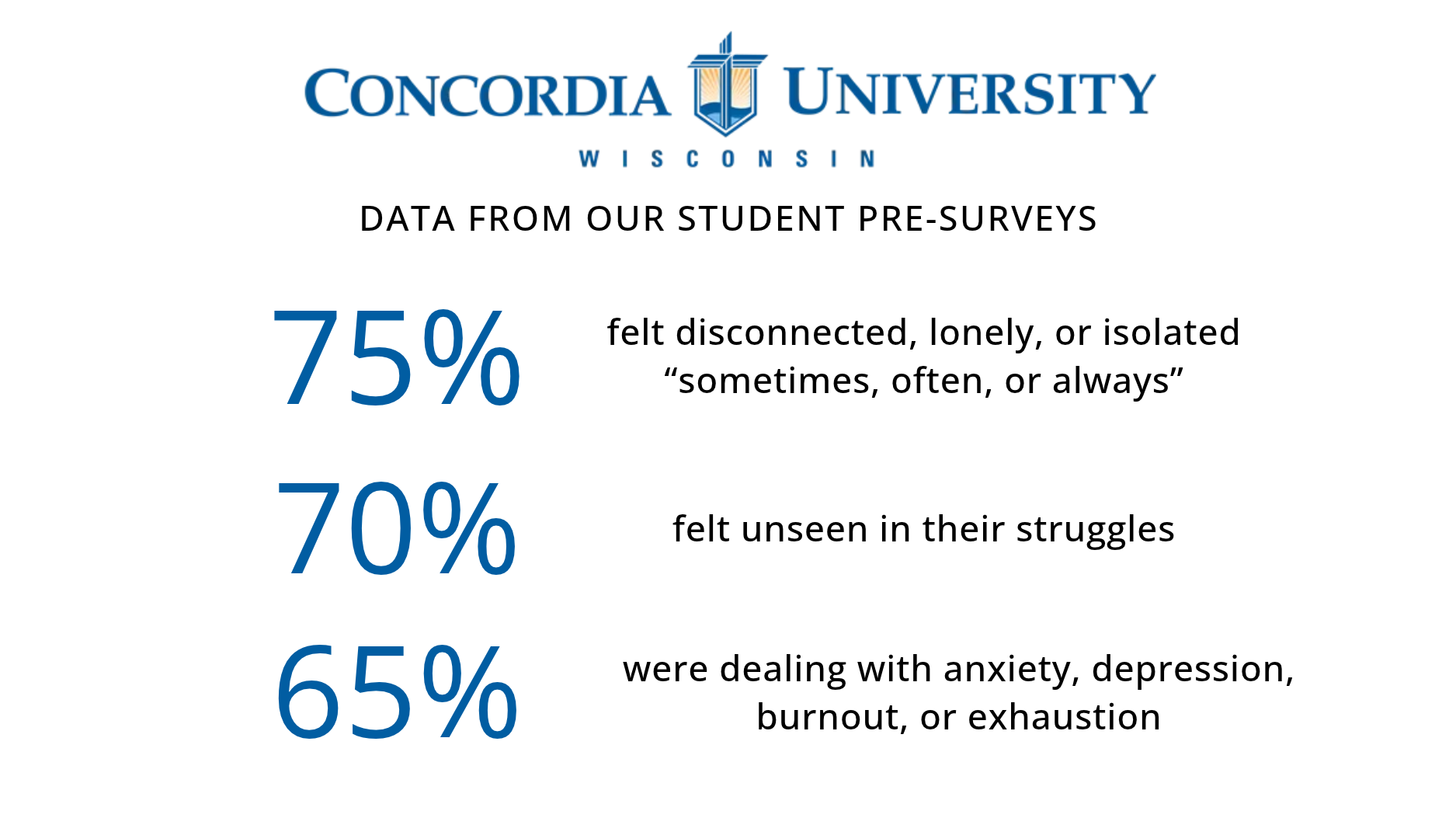
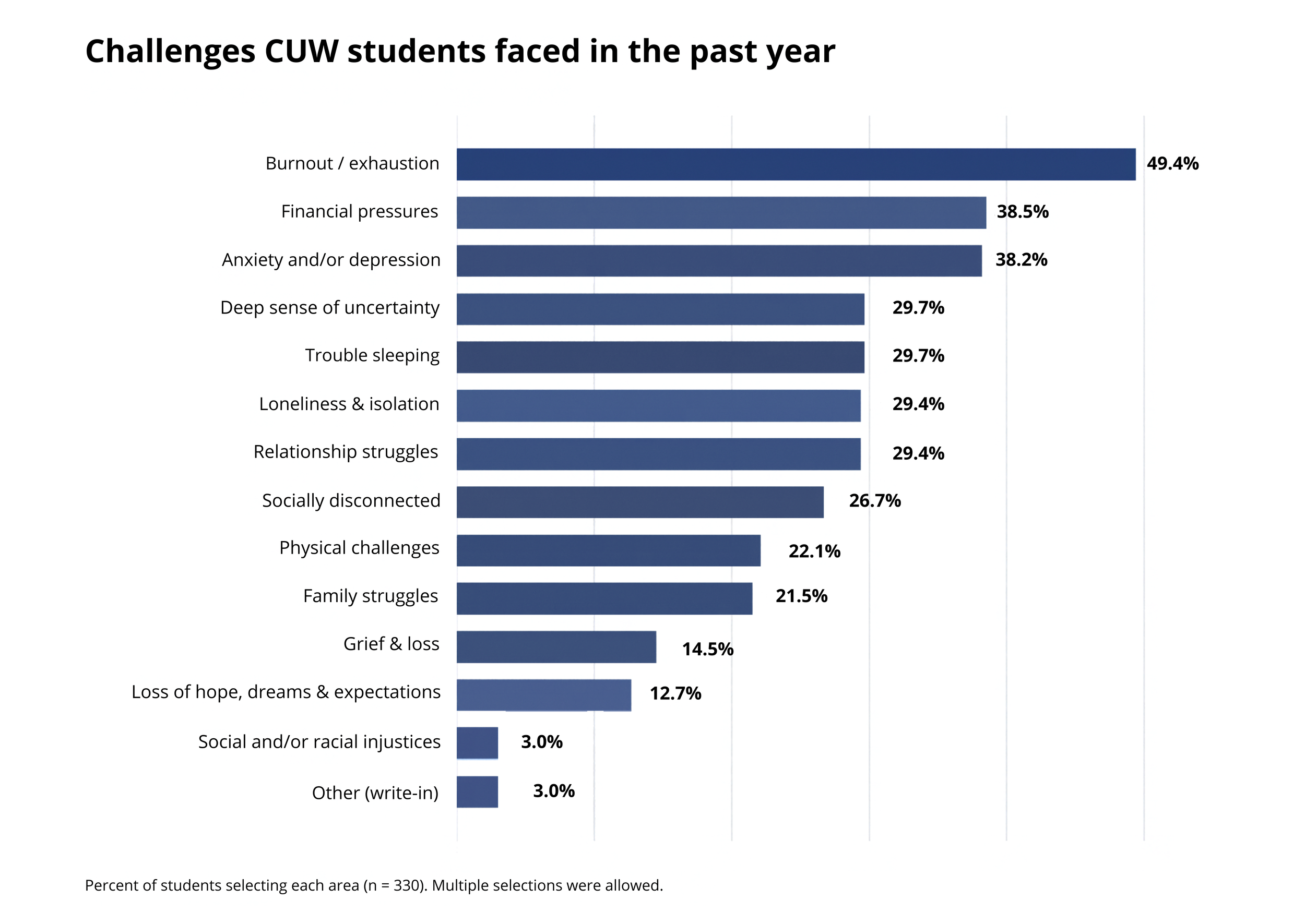
And what was the most prevalent response when Jen Marr shared this data with students?
“I thought I was the only one struggling. I learned that I’m not alone.”
As one student put it: “I know I personally have felt alone here at school and to see how many other people around me have as well was mind blowing. It really made me stop and think about those around me and consider what their actual perspective might be, rather than just what I see from the outside”
Another powerful insight emerged from the survey:
The #1 factor that made students feel cared for on campus? Professors who care.
Even more than friends who care or access to counseling services, students overwhelmingly pointed to faculty care as the most important support on campus.
The message was clear: It wasn’t enough to train students. Faculty and staff needed these skills, too.
In response, plans were set in motion:
Ten faculty and staff members began preparing to become Showing Up Certified Organizational Trainers the following summer—allowing them to continually deliver skills training across the university.
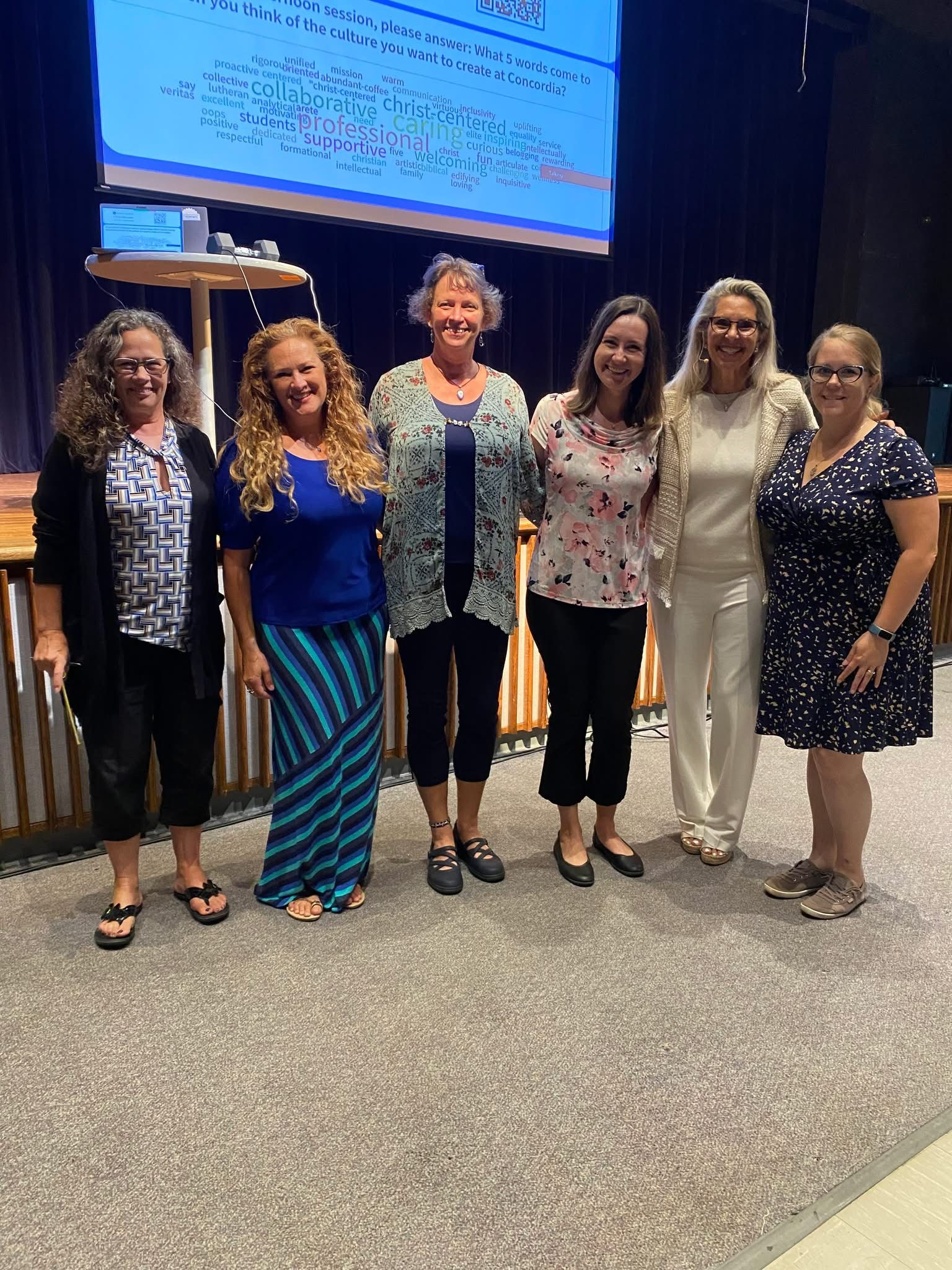
Organizing also began for a campus-wide faculty training, scheduled for CUW’s annual Faculty Summit.
This was just the beginning. The momentum was building—and CUW was leading the way in reimagining campus well-being through the power of human connection.
Year 2: 2023-2024
Expanding to Faculty & Staff
Building on the momentum from the previous year, Summer 2023 marked a pivotal expansion of the Showing Up initiative at CUW.
Ten faculty and staff members from across campus—including academics, campus safety, residence life, and student wellness—completed the Showing Up Certified Organizational Trainer (COT) program through an intensive 8-week certification training.
These individuals became on-campus champions of relational care, equipped to deliver Showing Up programming throughout the CUW community.

Making Support Personal
The pilot also gave leaders a way to understand how individual team members preferred to receive support.
157 participants completed a Personal Care Profile, answering optional questions about their preferences and needs.
These responses were compiled into 43 consolidated reports prepared for leaders and managers, with guidance for using them in future conversations.
The profiles made an important distinction visible: people need different kinds of support. Some welcome a conversation about what they are facing; others prefer more privacy. Leaders received a practical starting point for understanding those preferences rather than relying on assumptions.
The Impact:
Practical Tools & Clear Goals
Training evaluations showed strong enthusiasm for the program:
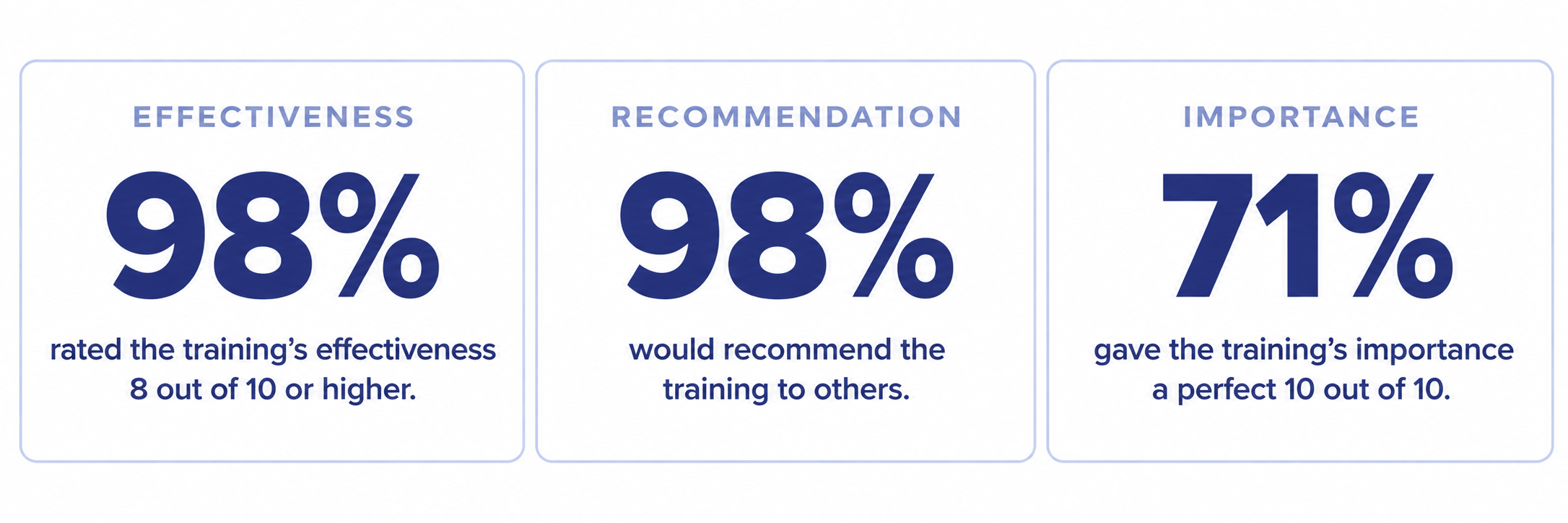
Participants highlighted the interactive activities, opportunities to connect with colleagues, and tools they could use after the sessions.
The closing Stop, Start, Continue exercise showed how participants intended to apply the learning.
Leaders wanted to stop automatically fixing problems, avoiding difficult topics, and using phrases that could minimize someone’s experience.
They planned to start allowing silence, using the PAUSE filter (what to consider when listening to someone who is struggling), listening more closely, and approaching difficult conversations with greater intention.
They also wanted to continue reaching out, being available, and building personal connections beyond the tasks of the workday.
A Foundation for Continued Change
The TWHT pilot demonstrated the value of listening before designing a solution.
Discovery revealed that employees wanted more accessible, consistent, and supportive relationships with their leaders and that leaders needed preparation and support to provide them.
By responding to those findings, the hospital moved from a broad culture initiative to targeted skill development grounded in its employees’ experiences.
Leaders gained a shared language, practical conversation tools, and personalized information to guide future support.